7 Zero-Waste Garden Projects You Can Make in a Weekend
20,365 views
Introduction: Why Zero-Waste Gardening Is Exploding in 2026
Step into any modern garden in 2026 and you’ll notice something different: less plastic, more reuse, and a clear intention to “close the loop.”
That’s not just aesthetic—it’s driven by necessity.
- Around 30–40% of household waste is compostable
- Up to 40% of home waste could be diverted from landfills through composting alone
- Sustainable gardening practices like composting and no-till are now considered core, not optional
At the same time, rising food costs and climate instability are pushing people to rethink how they garden. The result? A surge in zero-waste garden projects that are cheap, practical, and surprisingly fast to build.
This guide isn’t just a list of ideas. It’s a realistic, hands-on roadmap—based on what actually works for beginners and small spaces.
What Makes a Garden Project “Zero-Waste”?
Before jumping in, it’s worth clarifying: zero-waste gardening isn’t about perfection.
It’s about:
- Reusing what you already have
- Avoiding single-use materials
- Turning “waste” into resources (especially organic waste)
- Designing systems that sustain themselves over time
The goal is simple: less buying, less throwing away, more growing.
1. The 2-Hour Compost Bin (Beginner’s Fast Win)
Why this matters in 2026
Composting is still the backbone of sustainable gardening—and adoption is accelerating with faster methods like hot composting and worm bins .
What you’ll need
- Old wooden pallets or a large plastic bin
- Drill or hammer
- Dry leaves/cardboard
- Kitchen scraps
Steps
- Assemble 3 pallets into a U-shape (or drill holes into a bin for airflow)
- Layer:
- Browns (dry leaves, cardboard)
- Greens (food scraps)
- Water lightly
- Turn every 5–7 days
Timeline
- Setup: 2 hours
- Usable compost: 4–8 weeks (hot compost method)
Real-world insight
Most beginners fail because they add too many food scraps. Aim for a 2:1 ratio of browns to greens—this prevents smell and speeds decomposition.
Best for:
- Anyone with food waste
- Small or large gardens
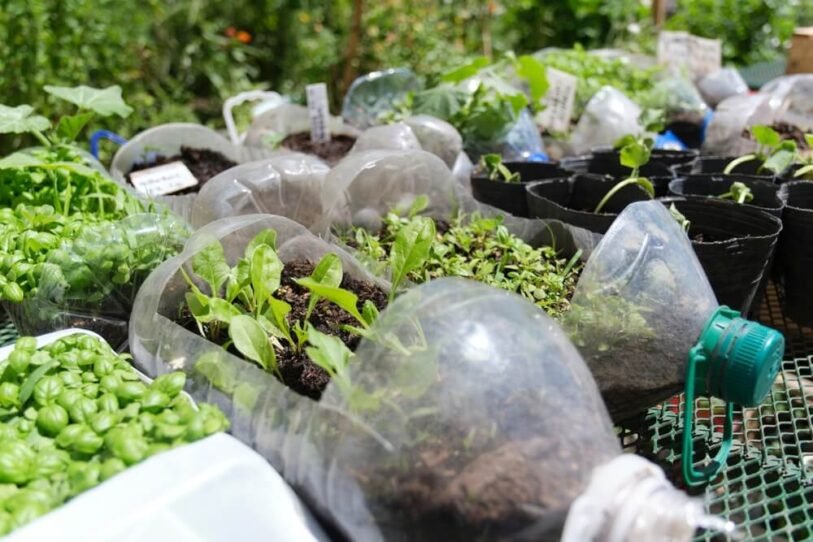
2. DIY Self-Watering Planters (Using Plastic Waste)
Why it’s trending
Urban gardeners are shifting toward low-maintenance systems that conserve water .
Materials
- Used plastic bottles or buckets
- Cotton rope or old cloth
- Soil + plants
How it works
- Cut bottle in half
- Insert wick through the cap
- Fill bottom with water
- Add soil and plant in top section
Key benefit
- Reduces watering frequency by up to 50% (practical observation)
- Keeps plants alive during hot weather
Expert tip
Use darker bottles or wrap them—light exposure can cause algae growth.
3. Cardboard No-Till Garden Bed
Why this is powerful
No-till gardening improves soil health and reduces labor significantly .
Materials
- Cardboard boxes (no glossy print)
- Compost or soil
- Mulch (leaves, straw)
Steps
- Lay cardboard directly on grass
- Soak it thoroughly
- Add 10–15 cm compost layer
- Top with mulch
Timeline
- Build: 3–4 hours
- Planting: Immediate
Non-obvious benefit
Cardboard suppresses weeds AND feeds soil microbes as it decomposes.
Best for:
- People starting a garden from scratch
- Anyone tired of digging
4. Kitchen Scrap Regrow Station
Why this works
Foodscaping—growing edible plants within decorative spaces—is rising fast in 2026 .
What you can regrow
- Spring onions
- Lettuce
- Celery
- Herbs
Steps
- Place scraps in shallow water
- Wait 3–7 days for roots
- Transfer to soil
Realistic expectation
Not all scraps will thrive long-term—but they’re excellent for quick harvests and learning gardening basics.
Pro tip
Use this as a “starter system” before investing in seeds.
5. Rainwater Collection System (Budget Version)
Why it matters
Water conservation is becoming essential as weather patterns become more extreme .
Materials
- Old barrels or bins
- Gutter pipe connector
- Mesh screen
Steps
- Place barrel under downspout
- Add mesh to filter debris
- Install overflow outlet
Cost breakdown
- DIY: $0–$20 (if using reused containers)
- Store-bought: $80–$200+
Hidden advantage
Rainwater is better for plants (no chlorine, more natural minerals).
6. Upcycled Vertical Garden (Small Space Hero)
Why it’s trending
Green infrastructure like vertical gardening is helping urban spaces grow food efficiently .
Materials
- Old shoe organizer / wooden pallet / plastic bottles
- Hooks or nails
- Potting mix
Steps
- Attach structure to wall/fence
- Fill compartments with soil
- Plant herbs or greens
Best plants
- Mint
- Basil
- Spinach
- Strawberries
Expert insight
Vertical gardens dry out faster—combine with self-watering techniques for best results.
7. Wildlife-Friendly “Scrap Habitat Corner”
Why this is overlooked
Modern gardens are shifting toward biodiversity and pollinator support .
Materials
- Fallen branches
- Leaves
- Stones
- Old pots
Steps
- Choose a quiet corner
- Stack wood and leaves loosely
- Add shallow water dish
What happens next
- Bees, insects, and birds move in
- Natural pest control improves
- Soil health increases
Reality check
It may look “messy”—but that’s the point. In 2026, imperfect gardens are considered healthier ecosystems .
Cost Breakdown: What You’ll Actually Spend
| Project | DIY Cost | Store Alternative |
|---|---|---|
| Compost bin | $0–$30 | $100–$300 |
| Self-watering planter | Free | $20–$50 each |
| No-till bed | $0–$40 | $200+ |
| Rainwater system | $0–$20 | $80–$200 |
| Vertical garden | Free | $50–$150 |
Insight: Most zero-waste projects save money upfront and reduce ongoing costs (fertilizer, water, soil).
Common Mistakes (That Most Blogs Don’t Mention)
1. Overcomplicating the setup
You don’t need perfect systems—simple setups work best.
2. Mixing treated materials
Avoid:
- Painted wood
- Glossy cardboard
- Chemically treated pallets
3. Ignoring climate
A design that works in a cool climate may fail in a tropical one. Adjust:
- Watering frequency
- Shade levels
- Plant choices
4. Expecting instant results
Zero-waste systems are slower at first—but stronger long-term.
Who Should Try These Projects?
Best for:
- Beginners who want low-cost gardening
- Renters or small-space gardeners
- Anyone trying to reduce household waste
Less ideal for:
- People expecting fast, high-yield farming
- Those unwilling to experiment or adapt
FAQ: Real Questions People Ask
Is zero-waste gardening actually cheaper?
Yes. Most projects rely on reused materials, reducing both upfront and ongoing costs.
How much waste can I realistically reduce?
Composting alone can divert 30–40% of household waste .
Do I need a big garden?
No. Many projects (like vertical gardens and scrap regrowth) work in balconies or small yards.
Is it time-consuming?
Initial setup takes a few hours, but maintenance is often lower than traditional gardening.
Conclusion: Start Small, Build Systems
Zero-waste gardening isn’t about doing everything at once.
Start with:
- A compost bin
- One self-watering planter
- A small no-till bed
From there, your garden becomes a system—where waste feeds growth, and effort decreases over time.
In 2026, the smartest gardens aren’t the most expensive or perfect-looking.
They’re the ones that waste nothing and keep giving back.
zero-waste garden projects
DIY garden ideas
sustainable gardening
weekend garden projects
eco-friendly garden hacks
recycled garden crafts
Found this helpful? Share it!
13 Comments
S
Shahid Ullah
Nice, site it looks most professional.
Replying to
I
ibizaMovement com
Replying to
A
Arturs
Àaaaaaaaaaaaaaaaaaaaaaaaaaaaaaaaaaaaaaaaaaaaaaaaaaaaaaaaaaaaaaaaaaaaaaaaaaaaaaaaaaaaaaaaaaaaaaaaaaaaaaaaaaaaaaaaaaaaaaaaaaaaaaaaaaaaaaaaaaaaaaaaaaaaaaaaaaaaaaaaaaaaaaaaaa
Replying to
K
Kanara Shetty
Wonderful
Replying to
K
Kanara Shetty
WOW!!!
Replying to
V
Interesting DIIY INFO👍
Replying to
A
ayan Raj dhami
very well everythiing is fine
Replying to
J
Very good
Replying to
S
saif
great
Replying to
F
FS
PAS MAL
Replying to
R
Ramesha
zero-waste garden projects that are cheap, practical, and surprisingly fast to build.
Replying to
R
Ramesha
zero-waste garden projects that are cheap, practical, and surprisingly fast to build.
Replying to
A
alessandro
Very good
Replying to